


Best Resources for Poets and WritersWinning Writers


Login to The Best Free Poetry Contests
Login to Poetry Contest Insider


Contest Database
Poetry Contest Insider
The Best Free Poetry Contests
Contests to Avoid
Contests Sponsored by Winning Writers
War Poetry Contest
Guidelines
FAQ
Submit Online
Submit by Mail
Past Winners
Wergle Flomp Free
Poetry Contest
Contests Assisted by Winning Writers
Tom Howard/John H. Reid Poetry Contest
Tom Howard/John H. Reid Short Story Contest
Margaret Reid Poetry Contest

Contests : War Poetry Contest : Past Winners : 2009 : Susan McCabe

Send this page to a friend, we'll donate 15 cents to literacy Third Prize - Susan McCabe

OR WEND, SKULL, WITH YOUR TEETH LIKE BRIGHT ARMOR

Don't want to be dead
remembering those I have not spent time
listening to, here on this perch so earthy.

Damien Hirst's skull thinks like this

Studded death-head worth nine million,
part of an enormous hedge fund
billowing, while art triumphs
over art—like Hirst's shark shredding

(don't be late; show ends)—
For eyes hollow like this diamond-studded skull,
jewels painstakingly placed—
where nose smashed in, then gaping
teeth armor of open lost bright mouth
dead we wear is not our death

When viewer sees this skull, viewer
has already eaten of earth and dust
Not as much as soldier wearing macerated skull
He wore it like a stereophonic mask,
connected his iPod through a hollow

Only he was many legs and eyes then, he
sang in pits, in multiples

          Call the poem "Wend" I thought
because I hearken back:
Not ready for skulls everywhere
harpooned, exposed, so wend
when we are wistful dreaming,
with face full-teared, wearing death
looking into little mosaic mirrors

Diamond skull isn't memento mori
It's a monument of, of
very inversion of art
Dead shark eye jeweled with irony
("skulls are in" a shopkeeper said,
stroking ivory skull of brandied caramel)
Hirst's skull is not Day of Dead kind

This soldier's skull, has brain's imprint
waves not touches though it hurts
felt shark's luscious-horrific tongue
Now what's sewn distance
—no decay for a hearse, hummer of Hummers,
flying through dungeon streets—
I wander alleys, glance back...

This soldier was mad with fear
where we have all gone half-cried
where we have all gone and will go
Must we wear our death this way?
Trace of where their brains
felt comfortably held.
Out of pan into angel fire

Can we carry-on our spare legs or must we check them
Appendages are necessary and many
for we live in an e-motive world
There are many appendages unchecked
I wander like a zombie playing checkers in his head
This soldier wore iPod dangling like an IV
It's death's glucose drip

Soldier abed for good it seems
"There" he says, "There, Livingston with pike"
Spindly curtains open a voice:
let there be space and time enough
Then a window upon dead crack'd ajar:
formaldehydish salt-water whirled

Decay is far away and ironic right here
We don't feel it, ripped flesh
of saddest shark in all world,
face-book of our times—
This soldier danced until fell down dirty,
skull was skin patched like leopard's

clawing down into music along his veins
in glucose drip
May I carry a spare leg on the plane?
(like some man parading his great-grandfather's
wooden arm from civil war,
pricing it on Antiques Roadshow)

This soldier fell down in his own brain
Soho is louder than usual with vanity
e-diamonds are durable things you'll ever see
atomic has a way with them then we'll see

His nurse thought he was a zombie.

Soldier said dead twice to prove he still lived
wearing dress of a voodoo princess
and tin body parts nailed to wood for cure
Glucose could be thinkier, thinker,
could be thicker, warmer blood


Skull had a prayer rug under it
before diamonds adhered
They shone ice in aluminum buckets—
lie-stars where skin had shrank away.

Artist not smartest harpoonist on earth
has grungy glass smile won't wear down slowly
Wend, skull, with your bright armor and teeth
Art, he says, comes from some place where nothing
stares back; sipping his cocktail,
dirty doesn't dirty him;

There's a certain pain that can't not be pain
Say to this skull, to shark shredding,
they can't bite, dying in public

This wasn't what soldier wanted skull to remember
His buddy filmed whole thing, came back in pieces
Art, he said, was a pit taken out of him—

dead dead
dead dead

(memory, not forsaken, of a rose from a bus stopped at a light after track practice;
of a tasted peach on blue jay way from open car, his three friends a shining thing)


This poem won third prize in the 2009 War Poetry Contest sponsored by Winning Writers. Author Susan McCabe received a $600 award. Copyright is reserved to the author.


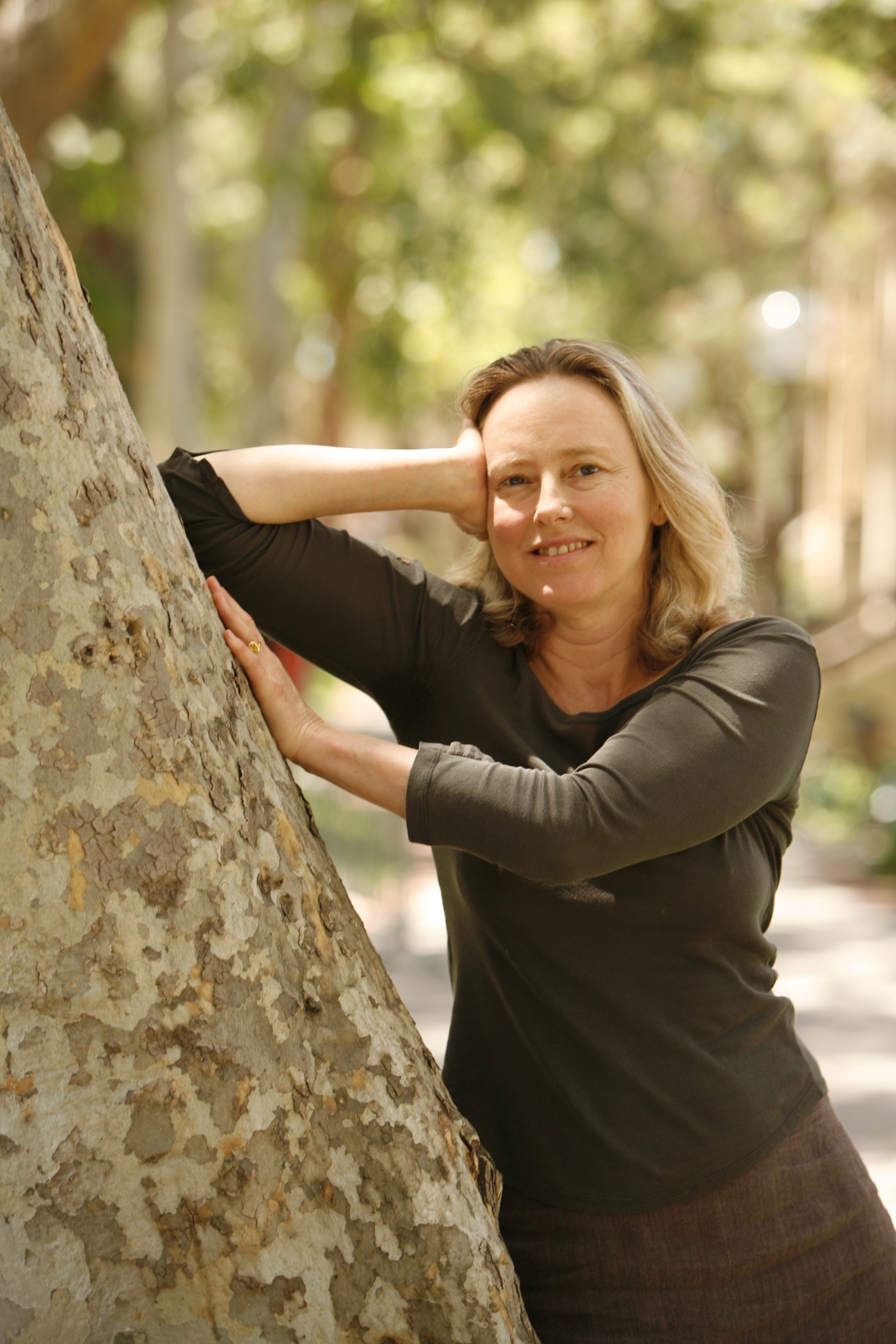
About Susan McCabe
Susan McCabe was born on Sunset Boulevard in Los Angeles, has taught in Oregon and Arizona, and received her PhD at UCLA. She also taught and conducted research in her mother's country of Sweden. She directed the PhD in Literature and Creative Writing Program (2006-2009) at University of Southern California, where she is a professor in the English department, and has been President of the Modernist Studies Association. She is the author of four books, including two critical studies—Elizabeth Bishop: Her Poetics of Loss (Penn State University Press, 1994) and Cinematic Modernism: Modernist Poetry and Film (Cambridge University Press, 2005)—and two poetry volumes, Swirl (Red Hen Press, 2003), and Descartes' Nightmare (winner of the Agha Shahid Ali Prize and published by Utah State University Press in 2008). She has published poetry and reviews widely, in such journals as Denver Quarterly, Volt, Colorado Review, Kenyon Review, Sonora Review, Antioch Review, and Lana Turner.

Her scholarship has primarily focused on modern and contemporary poetry and poetics, with an emphasis on modernism, gender studies and film; her creative writing builds upon many of the motifs found in her research. McCabe's research in 20th and 21st century poetry has been a major source for her creative projects. She has written and taught extensively in the subject of war poetry, designing a course: "Literature and the Trauma of War", which recieved a "political violence" award for designing curricula that sought to raise consciousness about the psychological and physical effects of war through film, poetry, novels and nonfiction. She is currently writing a biography about the neglected writer and modernist impresario, Bryher, in a book entitled Bryher: Female Husband of Modernism; the self-named illegitimate heiress not only sponsored numerous writers and artists, she was also actively involved in helping Jewish refugees across the border from Nazi Germany in the late Thirties. Bryher wrote a World War I novel, Civilians, and one set during the Blitz called Beowulf; these are books central to McCabe's depiction of the war-torn first half of the 20th century. In 2005, McCabe received a Beinecke Fellowship at Yale to conduct research at the library's enormous archive of Bryher's writing and correspondence. Simultaneously, McCabe is finishing another book of poems, Fates, a collection focused upon the voices of the dead, including those of soldiers, as they haunt the living.

Read about the sculpture that inspired this poem here.

Susan McCabe                                                                                                                                                                                                                                        


Subscribe to our feed RSS Feed | Free Newsletter | Customer Service | Contact Us | Privacy | Advertise

Copyright 2001-2012, Winning Writers, Inc. Site design by EyeArchitect.
Beyond fair use, no part of this website may be reproduced without permission.
All rights reserved.